

What are the disadvantages of Mech Seals?
Hey there! As a mech seal supplier, I've been in the industry for quite some time. While mechanical seals, like Mechanical Face Seal, Flygt Seals, and Pump Shaft Seal, are super useful in a bunch of applications, they're not without their downsides. In this blog, I'm gonna share some of the disadvantages of mech seals that you should be aware of.
High Initial Cost
One of the biggest drawbacks of mech seals is the high initial cost. Compared to other types of seals, like packing seals, mech seals are way more expensive. The materials used in mech seals, such as carbon, ceramic, and various metals, are costly. Plus, the manufacturing process is complex and requires high - precision machining. This all adds up to a hefty price tag.
For small - scale operations or businesses on a tight budget, the upfront investment in mech seals can be a real deterrent. You might be thinking, "Well, I'll just go for the cheaper option." And that's a valid thought, but it's important to weigh the long - term benefits against the initial cost.
Complex Installation
Installing mech seals is no walk in the park. It requires a high level of skill and knowledge. If the installation is not done correctly, it can lead to a whole host of problems. The seal faces need to be aligned precisely, and the gland must be tightened evenly. Even a small misalignment can cause the seal to leak or wear out prematurely.
Moreover, the installation process often involves disassembling parts of the equipment, which can be time - consuming. This means more downtime for your machinery, and in a production environment, downtime can translate into lost revenue. You can't just have an inexperienced person try to install a mech seal; you need someone who really knows what they're doing.
Sensitivity to Operating Conditions
Mech seals are pretty sensitive to the operating conditions. They don't do well in environments with high temperatures, high pressures, or abrasive media. High temperatures can cause the seal faces to warp or the elastomers to degrade. This can lead to leakage and reduced seal life.
When it comes to high - pressure applications, mech seals need to be carefully selected and designed to withstand the pressure. If the pressure exceeds the seal's rating, it can cause the seal to fail. And in the presence of abrasive media, the seal faces can wear out quickly. The particles in the media can act like sandpaper, gradually eroding the seal surfaces.
Maintenance Requirements
Mech seals require regular maintenance to ensure their proper functioning. This includes monitoring the seal performance, checking for leaks, and replacing worn - out parts. The maintenance process can be complex and time - consuming. You need to have a maintenance schedule in place and trained personnel to carry out the tasks.
For example, the seal faces need to be inspected regularly for signs of wear. If the wear is excessive, the seal may need to be replaced. Also, the lubrication system, if there is one, needs to be maintained to ensure proper lubrication of the seal faces. Failure to perform regular maintenance can result in seal failure and costly repairs.
Limited Compatibility
Not all mech seals are compatible with all types of fluids. Different fluids have different chemical properties, and the seal materials need to be selected accordingly. For instance, some seals may not be compatible with corrosive chemicals or aggressive solvents. Using an incompatible seal can lead to chemical reactions that damage the seal and cause leakage.
You also need to consider the viscosity of the fluid. High - viscosity fluids can put more stress on the seal, and the seal may need to be designed to handle this. So, when choosing a mech seal, you have to do your homework and make sure it's compatible with the fluid in your application.
Seal Failure and Downtime
When a mech seal fails, it can cause significant problems. The most obvious issue is leakage, which can lead to product loss, environmental pollution, and safety hazards. In industrial settings, leaked fluids can be flammable, toxic, or corrosive, posing a risk to workers and the environment.
Seal failure also means downtime for your equipment. You have to shut down the machinery, replace the seal, and then test the system to make sure it's working properly. This downtime can be a major headache, especially in industries where continuous operation is crucial, like manufacturing or chemical processing.
Short Lifespan in Some Applications
In certain applications, mech seals have a relatively short lifespan. In high - wear applications, such as those involving abrasive slurries or high - speed rotation, the seal faces can wear out quickly. This means you'll have to replace the seals more frequently, which adds to the overall cost of operation.
The lifespan of a mech seal can also be affected by the frequency of start - stop cycles. Each time the equipment starts and stops, there is a shock to the seal, which can cause wear and tear. So, if your equipment has a lot of start - stop cycles, you may find that your mech seals don't last as long as you'd like.
Costly Replacement
When it's time to replace a mech seal, it's not just the cost of the new seal that you have to consider. There are also the costs associated with the replacement process. This includes the labor cost for removing the old seal and installing the new one, as well as the cost of any additional parts that may be needed.
If the seal failure has caused damage to other components of the equipment, you'll have to factor in the cost of repairing or replacing those parts too. All these costs can add up, and it can be a significant expense for your business.

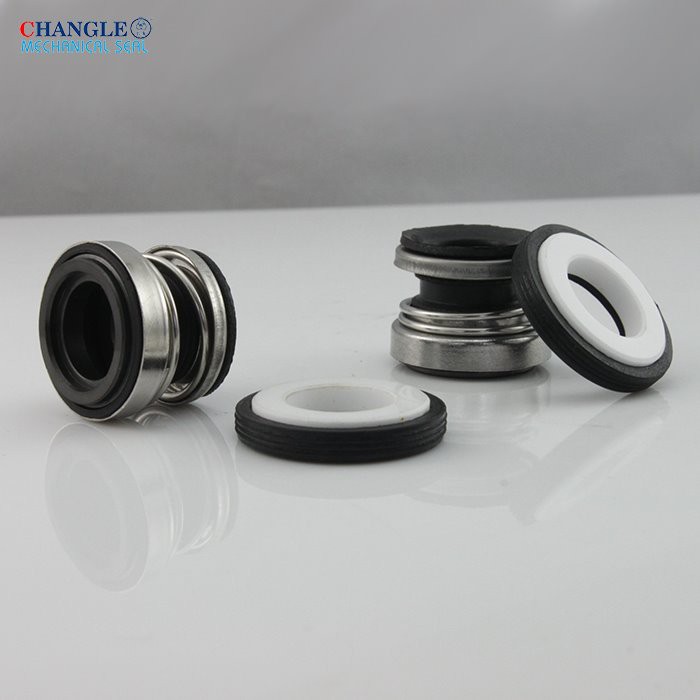
Lack of Standardization
The mech seal industry lacks a high degree of standardization. There are many different types, sizes, and designs of mech seals available in the market. This can make it difficult for users to choose the right seal for their application. You may find that a seal that works well in one piece of equipment may not be suitable for another, even if the applications seem similar.
This lack of standardization also makes it challenging to source replacement parts. You may have to deal with multiple suppliers to find the exact part you need, which can be time - consuming and frustrating.
Despite all these disadvantages, mech seals are still widely used because they offer excellent sealing performance in many applications. If you're facing any of these issues with your mech seals or are considering using them in your equipment, don't hesitate to reach out. We're here to help you choose the right seal for your needs and provide you with support throughout the process. Whether it's advice on installation, maintenance, or choosing the most cost - effective option, we've got you covered. So, if you're interested in discussing your mech seal requirements, let's start a conversation and see how we can work together to solve your sealing problems.
References
- "Mechanical Seals: Principles and Applications" by A. A. Khonsari and E. R. Booser.
- Industry reports on mechanical seals from various manufacturers and research institutions.